

Go big or go home — I guess that was the philosophy behind my first solo overseas trip. With nothing much to go on other than I studied graphic design, I’m a fan of Nordic design, and Lund University just happened to have a compatible exchange program with my university, I packed my bag and moved to Sweden for 6 months. One of the best decisions I’ve ever made.
And just like that, it’s over.
Sweden seems like a dream now, but I wouldn’t trade the experience for the world. It’s an easy first country to visit solo, but it also kind of isn’t if you’re a poor student.
I want to be completely objective and list both good and bad things because every country in the world has them. There are two sides to travel content these days: the side that sees everything through rose-tinted glasses and omits negative experiences, and the site that solely focuses on the negatives to farm outrage engagement. I don’t find either extreme particularly helpful, especially in the context of offering your experiences to people who might consider traveling to that country.
Especially after spending 6 months in Sweden, it would be malpractice to pretend I didn’t see anything negative, even if it was quietly lurking among so many positives. So, please don’t be offended my Swedish friends, this is simply what I walked away with.
The Good
Sweden is calm and lagom.
No one shouts, no one honks their horns. Everyone seems to be more patient and relaxed. It’s lagom. If you didn’t see my previous post, lagom is an eloquent catch-all term for balance and moderation, a way to neatly encapsulate the vibe of not too much and not too little — just the right amount. You see it in Swedish design, you sense it in the cafes, and you feel its invisible hand guiding the way Swedish society functions. From work-life balance to the art of listening just as much as speaking social interactions, no one could really accuse the Swedes of being “over the top” in most situations.
The infrastructure is great.
There are bike paths everywhere, and the trains and buses make it easy to reach any part of the country without too much trouble. As an American who had a fairly rural upbringing, the fact that I could hop on a train in Lund and be in Malmö — Sweden’s third largest city — for a festival in 15 minutes was incredible to me. Then there’s the extensive cycling network throughout the country. I could be at the beach in Lomma within a half hour by bike, all without competing with impatient motorists with a vendetta. This route is one of many in Sweden that follows the thousands of kilometers of dedicated paved cycle paths completely separate from the roads.


Quaint little Lund, where I was studying for 6 months.
Everything is extremely clean (and sustainable).
I’ve never seen such pristine streets anywhere. There’s even a guy who’s paid to walk around with a mini-flamethrower to burn the moss that grows between the cobblestones. Sweden’s philosophy of lagom applies just as much to city streets and nature as it does to tidy rooms with neutral tones and hardwood floors. But it’s not just limited to appearances. Swedes have sustainability and preservation of nature hardwired into them, so much so that the country has succeeded in diverting 99% of household waste from landfills. Outside my own apartment complex there were nearly 10 different bins for sorting food waste, paper, plastic, glass, metal, batteries, and more.
Don’t forget to NOT tip.
There is no minimum wage required in Sweden. Wages are instead set by collective bargaining, and unskilled labor wages are extremely high, comparatively. Consequently, tipping is just not part of the culture, aside from rounding up to the nearest even amount for exceptional service. Without the race to the bottom possible wage, you don’t feel “guilted” into leaving a tip in almost every conceivable circumstance like in the US. Even if you receive next-level service, don’t be tempted to go beyond the extra few rounding kronor. Locals tend to not appreciate US tipping culture being exported to their countries.
“Sweden’s philosophy of lagom applies just as much to city streets and nature as it does to tidy rooms with neutral tones and hardwood floors.”
The food is healthier and local.
The government has high standards for what is in the food, so you can expect lower amounts of steroids, hormones, and other crap in what you’re eating. Most of it is also sourced locally. Just being honest, the cuisine itself never knocked my socks off, but it was noticeably cleaner eating than back home. I felt much healthier than my previous 3 years of a student diet back home, even though I often paid a much higher price for it. That brings us to the bad…
The Bad
It ain’t cheap.
The standard of living is higher than America’s, and you pay for it. To fund Sweden’s extensive collection of nice things like free healthcare, there is a standard 25% VAT on goods and services (although this rate can very by industry, e.g., 12% on food and restaurants). Swedes also earn high wages, which means labor costs are higher and baked into prices. Despite all this, the welfare state that contributes to the high standard of living, and higher costs, remains almost universally popular across the political spectrum. In an ideal world where taxpayer funds actually pay for these things, and wages keep up with cost of living, I wouldn’t necessarily mind paying more in tax either. But for short-term visitor without access to the system, it can really hit the wallet hard.
The Swedish social shell can be hard to break through.
Swedes, and Nordic people in general, have this reputation of being extremely socially reserved. There is some truth to it, especially if you are just passing through. You might find it hard to connect with people on a level beyond standard day-to-day interactions. But don’t interpret it as aloofness. Swedes value respecting personal bubbles, and leaving space between oneself and others, whether physically or conversationally, is considered polite. If you want to pop that bubble, head to the nearest watering hole. In my experience, once you get a few beers in a Swede, they don’t stop talking.
Alcohol will be the scourge of your bank account.
Speaking of beer, buying even the local domestic (e.g., Spendrups) can set you back as much as $9 at the pub. Having drinks out at bars and restaurants will add significantly to your budget if you don’t pay attention. To save some money, you can grab your pre-party supplies at the Systembolaget, the government-run alcohol store. While drinks are certainly cheaper than the bars here, it’s still more expensive than the ABC Store in my home state of NC. Also, don’t wait till the weekend — the queues are massive on Fridays and Saturdays ahead of the Sunday closure.

Heading to Sweden? Go on a self-guided audio tour with AllTours!
Whether you’re strolling the streets of Stockholm, hoofing it in Helsingborg, or venturing to the northern reaches of Umeå, it’s nice to go in with a little bit of direction. Consider grabbing a self-guided audio tour from the AllTours app. You don’t have to constrain yourself to a field trip for adults — start and stop as you please. Available in 50+ languages, AllTours is a great resource for gaining a deeper insight of 1,000+ cities on the fly!
The Ugly
From 2010 onwards, Sweden has received a large influx of immigrants and asylum seekers from the Middle East and Africa. As with much of Europe, this has become a very controversial topic in the sociopolitical dialogue. Sometimes, you might hear some ugly things in that dialogue. Now, I’m not one to come into someone else’s country and tell them how to solve this or that. But the lack of empathy I encountered sometimes on this topic was a little disheartening.
This situation stirs up heated emotions on all sides, and it’s a topic where lagom may have fallen by the wayside. It’s a conversation driving Swedish politics — likely not a conversation you’ll encounter as the average tourist, but after 6 months, you hear some things. As with all things political abroad, best not get involved and relegate yourself as listener rather than a participant if it does come up.

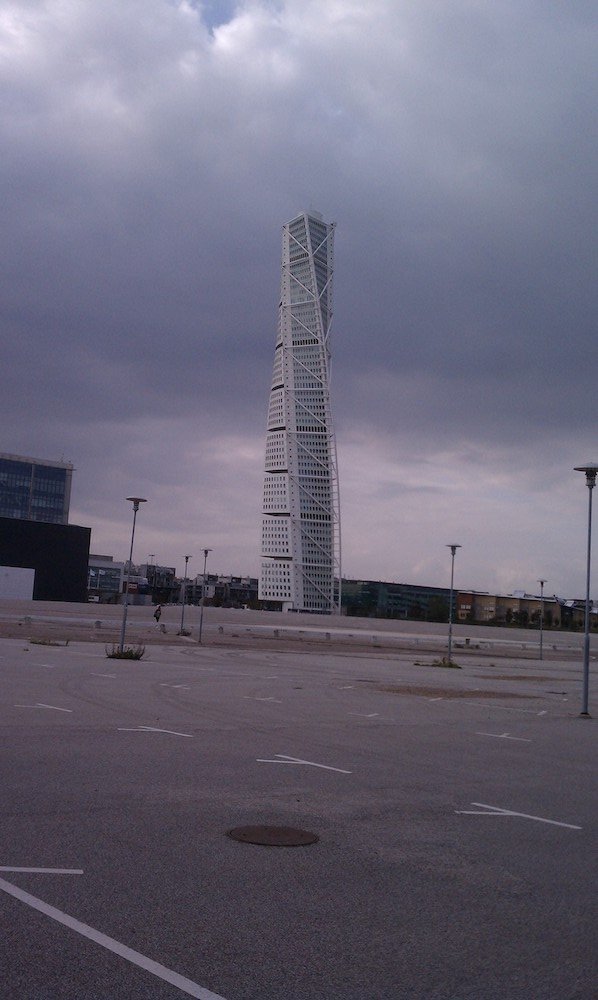


Helsingborg, Malmö, and biking along the Skåneleden.
The Awesome
Fika!
Fika is an awesome social institution in which everyone takes a break in the early afternoon to enjoy coffee, something sweet, and good conversation. Expect to see packed coffee shops from 1-4 PM. Fika is enjoyed by most employees, in addition to lunch. Even the government observes it!
Sweden has one of the largest remaining wildernesses in Europe.
In fact, most Swedes are nature freaks and can be seen doing something outside no matter what the weather. As a self-aware nature freak, this is great.
Concluding thoughts…
Sweden exudes that special Scandinavian atmosphere that you can’t quite describe no matter how recognizable it might be. The atmosphere is calm, and life is an exercise in practicality. I’ll miss the moments out with friends when we would see something “that’s so Swedish.”
Like guys wearing tight red pants while sporting Sting’s hairstyle from the early years, or even Bowie’s if they’re particularly trendy.
Or the ease with which a Swede uses his/her iPhone on the train, almost like an instrument, putting even the most adept US hipster to shame.
I will definitely long to hear melodic Swedish conversations in the background, patting myself on the back whenever I can understand something.
It will be difficult to yell “Hej allihopa!” to a crowded room and receive confused expressions instead of laughter in return…
…and now I’ve shot off into a reflective diatribe. It’s just as well. I’ll try to keep the bitching about being back in the US to a minimum here. It will be interesting to see how long it takes me to readjust, and what thoughts the whole process will provoke. Hopefully, it won’t be too soul-crushing. I’m looking upwards and onwards, at any rate. ༄